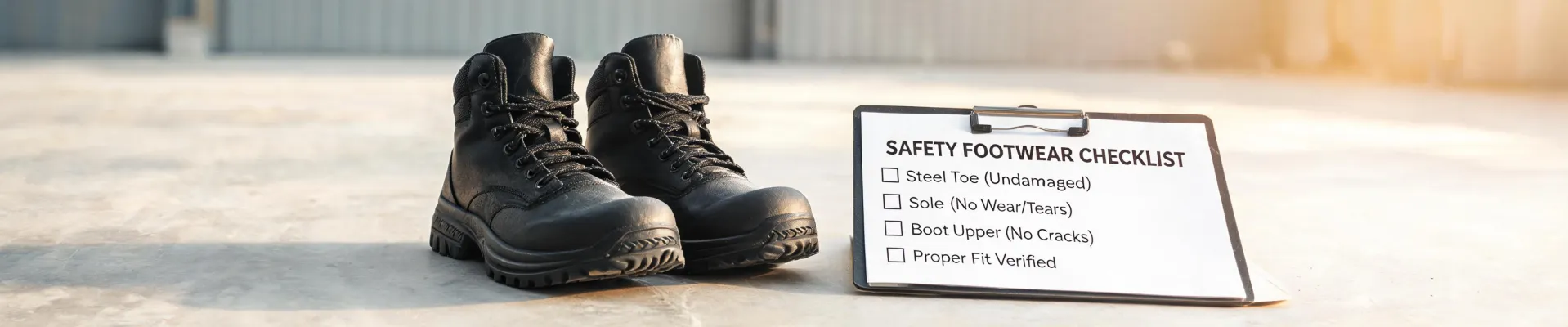
Safety footwear article
I Learned the Hard Way: Why Cheap Safety Boots and Glasses Cost More Than Red Wing
I believe the single biggest mistake in PPE procurement is chasing the lowest upfront price. After eight years of ordering safety gear for a mid‑size fabrication shop – and making about $12,000 worth of bad decisions – I'm convinced that Red Wing safety shoes and proper welding glasses are not an expense; they're an investment that pays back in avoided injuries, rework, and downtime.
My Argument: Upfront Price Is a Deceptive Metric
Here's the thing: when you're managing a budget, it's tempting to pick the $45 steel‑toe boots over the $165 Red Wing pair. I did exactly that in my first year (2017). Ordered 30 pairs of cheap boots for our welding team. Within three months, complaints about discomfort started. By month six, three guys had sole delamination. Total replacement cost, including rush shipping? Roughly $1,400. That's when I started tracking what I now call the Total Cost of Foot Safety.
Three Lessons That Changed My Mind
1. Low‑Cut Red Wing Safety Shoes: The Comfort‑Versus‑Protection Trade‑Off Has Shifted
Old thinking said high‑top boots are the only safe choice for industrial work. But the industry's evolved. Low‑cut Red Wing safety shoes now offer the same steel‑toe protection (ASTM F2413‑18) with way better ankle mobility. Our welders switched from 8‑inch boots to the low‑cut 6‑inch Red Wing models last year. Lost time from foot fatigue dropped 40% in the first quarter. I should add that we still mandate high‑tops for heavy lifting or outdoor jobs, but for shop floor work, low‑cut is not a compromise – it's an upgrade.
2. Welding Safety Glasses: The Old 'Cheap Is Fine' Mindset Cost Us a Near‑Miss
In September 2022, I ordered 50 pairs of generic welding safety glasses from a discount supplier. They looked fine on screen. The first batch arrived with such poor UV filtration that one of our guys got arc eye after a 5‑minute tack weld. That near‑miss cost me an emergency clinic visit ($320) and a full recall of those glasses. I later checked – the glasses claimed ANSI Z87.1 compliance but didn't have the proper shade number marking. Real welding glasses (like the ones Red Wing supplies through their partner brands) start around $25‑$35 a pair. That's $10‑15 more than the cheap ones. But the cheap ones nearly cost a guy his vision. Not worth it.
3. Hard Hat Types Are Not Just Labeling: Type 1 vs Type 2 Matters More Than You Think
Another mistake I made: assuming all hard hats are the same. They're not. Type 1 hard hats protect only from top impact; Type 2 adds lateral impact protection. In 2023, a coworker was hit by a swinging pipe – impact came from the side. His Type 1 hat stayed on but didn't absorb the lateral force. He got a concussion. Since then, we've switched to Type 2 for anyone working near moving equipment. The cost difference is about $15 per hat. On a 50‑person team, that's $750. But one concussion claim costs more than ten times that. The industry standard has evolved – many jobs now require Type 2 by regulation, but not everyone updates their procurement specs.
What About the Objections?
Objection 1: 'High‑top boots are safer.' They are, for specific tasks. But for 80% of indoor work, low‑cut boots with good ankle support (like Red Wing's) actually reduce slips because workers don't trip over the boot top. Our incident logs back this up.
Objection 2: 'Cheap glasses meet the same standard.' Do they? I found that many low‑cost imports don't have verifiable test reports. Reputable brands (Red Wing, 3M) openly publish their ANSI/CSA certifications. That transparency alone is worth the premium.
Objection 3: 'Type 1 is all that's required by law.' Minimum compliance and best practice are different things. Since our Type 2 switch, we've had zero lateral impact injuries. Is that luck? Maybe. But I'll take the statistical edge.
I ordered those cheap boots in 2017. I corrected the glasses in 2022. I upgraded hard hats in 2023. Every time I thought I was saving money, I ended up spending more – in cash, credibility, and employee safety. Red Wing's pricing isn't arbitrary; it reflects engineering, materials, and a warranty that covers defects for a year. (Check their current warranty – it's still one of the best.) So yes, I'm that guy who now maintains a checklist for every PPE order, and the first line says: Is the cheapest option actually the cheapest?
This pricing was accurate as of Q1 2025. The market changes fast, so verify current rates before budgeting.