Hazard Intake
We collect job tasks, floor conditions, toe protection requirements, chemical exposure notes, and any site rules that affect acceptable footwear.
Fit and issue services
Safety footwear only works when workers keep it on. Our service model helps EHS and procurement teams translate hazard notes, width data, shift realities, and replacement cycles into a practical issue program. Instead of asking buyers to compare every boot on a spreadsheet, we start with the workplace: concrete floors, wet dock plates, energized equipment, metal fabrication, rough outdoor ground, or controlled hygiene zones. From there, we document the protection features that matter, including ASTM F2413-18 I/75 C/75 toe impact and compression, electrical hazard markings, slip resistance needs, and metatarsal coverage where dropped-object risk is present.
These cards can be reviewed as a buying sequence or used independently for a single site refresh.
We collect job tasks, floor conditions, toe protection requirements, chemical exposure notes, and any site rules that affect acceptable footwear.
Width, gender mix, arch comfort, heat buildup, and break-in concerns are mapped before the purchase list is narrowed.
Steel toe, composite toe, EH, SR, waterproof, and metatarsal features are matched to the actual risk profile rather than one generic rule.
Procurement receives clear style groups, sizing notes, supervisor talking points, and suggested replenishment windows.
The numbers above are planning handles, not safety guarantees. They keep the footwear discussion organized for buyers who need comfort, compliance language, and supply practicality in one workflow.
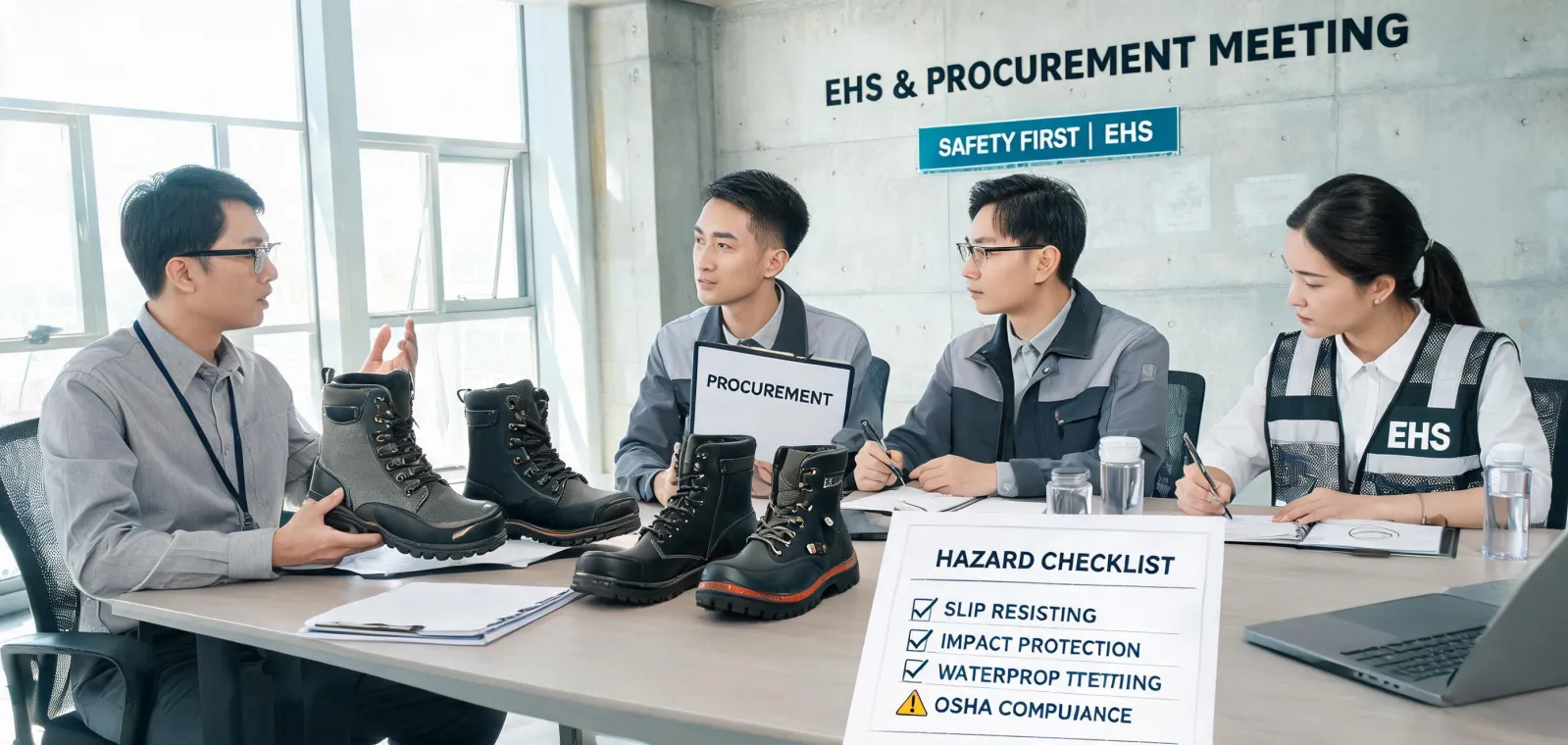
We will help you turn comfort feedback, ASTM F2413 requirements, and site purchasing rules into a focused footwear shortlist.