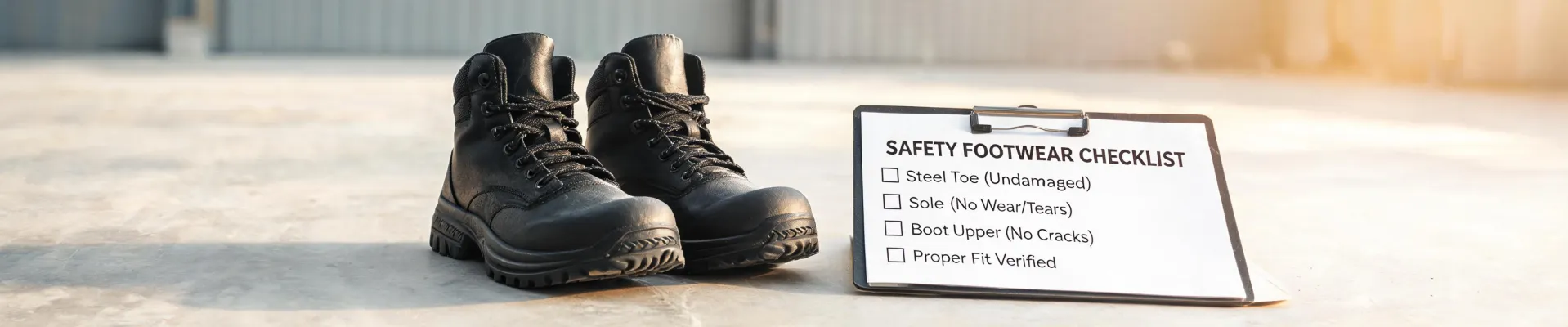
Safety footwear article
Red Wing vs Timberland Work Boots: What 300+ Orders Taught Me About Safety Toe Shoes
-
Why This Comparison, and How I'll Judge It
-
1. Safety Toe Types: More Than Just Steel
-
2. Fit and Sizing: Where Red Wing Earns Its Price
-
3. Durability and Comfort: They're Not the Same Thing
-
4. Pricing Transparency: The Hidden Cost Problem
-
5. Where to Buy: Don't Get Scammed
-
So Which One Should Your Team Wear?
I handle PPE procurement for a regional contractor. Seven years in, I've personally made—and documented—six significant mistakes, totaling roughly $11,000 in wasted budget. Now I maintain our team's checklist to prevent others from repeating my errors.
The debate I deal with most? Red Wing vs Timberland work boots. It comes up every time we onboard a new site team. And honestly, the answer isn't "one is better." But it is learnable.
Here's what I've learned the hard way.
Why This Comparison, and How I'll Judge It
We've bought both brands in serious volume. Red Wing for crews that need heavy-duty protection and exact sizing. Timberland for crews that need decent protection at a lower entry price.
My experience is based on about 300 mid-sized orders—mostly 10 to 50 pairs per order. If you're running a 500-person industrial site, your experience might differ. But for the typical 20-person crew? These patterns hold.
Here's the framework I use:
- Safety toe types—which options exist, and when the choice actually matters
- Fit and sizing—where my most expensive mistake happened
- Durability and comfort—they're not the same thing
- Pricing transparency—the hidden cost problem
- Where to buy—and how to avoid counterfeits
1. Safety Toe Types: More Than Just Steel
"Red Wing work safety toe shoes types" is a search someone types when they're drowning in options. Let me save you the time.
Red Wing offers three main safety toe types across their work boot line:
- Steel toe—maximum impact protection. But heavier, and it conducts cold.
- Composite toe—non-metallic. Lighter, doesn't conduct cold, and performs better in electrical hazard environments.
- Alloy toe—lighter than steel but still metal. A middle ground.
Timberland's lineup covers similar ground—steel and composite toes dominate their Pro and Pit Boss series. So the types aren't where the difference lies. The difference lies in ordering the right type for each worker.
In September 2022, we were doing a site build-out that included installing a galvanized steel fence around the yard. The crew was a mix of general laborers and electricians. I ordered steel toe for everyone. Simple, right?
The electricians refused them. They required non-conductive composite toe. I'd checked the "safety rating" box without checking the "job-specific requirement" box. Thirty-two pairs, $4,200, and a two-week delay for the replacement order. Straight to the swap pile.
After the third rejected delivery in Q1 2024—two for toe type errors, one for missing documentation—I added a pre-check list that covers toe type, certification, and job requirements before any boot order goes through.
One more thing on this: per FTC guidelines (ftc.gov), safety claims on protective footwear have to be substantiated. Always ask for the ASTM F2413-18 certification paperwork—regardless of which brand you're considering. If a sales rep can't produce it, that's your answer.
2. Fit and Sizing: Where Red Wing Earns Its Price
Ask ten workers about Red Wing vs Timberland fit, and you'll get eleven opinions. Here's the structured version.
Red Wing has professional fitting in their stores. They measure both feet, check width, and factor in the socks you'll wear. They carry half sizes and multiple widths—including E and EEE for workers who say "my boots always feel tight."
Timberland fits more "standard." They run slightly roomy in the toe box, which some workers love. But if someone has a genuinely wide foot, options are limited.
This is where I learned my second big lesson.
In 2023, we ordered 40 pairs of Timberland Pros based on worker-declared sizes. No fitting. No width verification. Twelve pairs were wrong. Some too tight, some too loose, three workers insisted the "sizing felt off" in a way that didn't match any number on the box.
Red Wing would've caught that during fitting. That's not a marketing claim—that's a process difference.
And about that logo: the logo red wing shoes mark isn't just branding. It's a quality bar. Counterfeits exist, and I've seen fake pairs with compromised safety toes show up on job sites. Always verify you're buying from an authorized dealer.
3. Durability and Comfort: They're Not the Same Thing
Here's where the conventional advice breaks down.
Most people will tell you Red Wing boots last longer. In our data, they do—by roughly 30-40% in daily wear on concrete and uneven terrain. Our Red Wing pairs average 14-18 months before needing a resole. Timberlands average 10-12 months.
But "lasts longer" doesn't always mean "better value." Comfort matters too, and a boot that requires break-in is a boot workers may refuse to wear.
Timberlands have easier break-in. Most of our workers reported being comfortable within the first few days. Red Wings took a week or two—or rather, up to three for workers who'd been wearing oversized boots for years.
My takeaway: for a crew with high turnover, faster break-in matters more than maximum lifespan. For a long-term crew doing heavy work? The durability math favors Red Wing.
(This was accurate as of Q4 2024. Product lines change, so verify current models before budgeting.)
One more note: Red Wing's recrafting program is genuinely good, but it only pays off if workers keep the same boots long enough to use it. That's a procurement question, not just a comfort question.
4. Pricing Transparency: The Hidden Cost Problem
You'd think pricing would be simple. It's not.
Here's the gut-vs-data moment I still remember.
Every spreadsheet said Timberland. On paper, they were 15-20% cheaper per pair for equivalent safety ratings. The data was clear.
My gut said otherwise. I'd watched too many "cheaper" orders turn expensive.
In 2021, I ordered 50 pairs of "discounted" Timberlands from an online liquidator. The price per pair was great. The defects? Not so great. Six pairs failed stitch integrity within two weeks. Replacement costs, return shipping, and two days of delayed crew time ate the entire discount—and then some. To be clear, that wasn't Timberland's fault; it was a sourcing risk I accepted and shouldn't have.
The question isn't "what's the price?" It's "what's NOT included in the price?"
Here's my checklist now:
- Shipping costs—itemized, not bundled
- Restocking fees for wrong sizes
- Warranty return process—who pays return shipping?
- Bulk order discounts—real or just repackaged MSRP?
Transparent pricing—even when the upfront number looks higher—almost always costs less in the end. The vendor who lists all fees upfront is the vendor I trust. It's not about charity; it's about predictable budgeting.
And small costs compound. USPS First-Class Mail is $0.73 as of January 2025—I only mention that because it's the cheapest shipping option in existence. A pair of boots? You're looking at $18-35 per pair via parcel carriers. Return shipping adds $15-25 per pair. On a rejected order of 40 pairs, that's over $1,000 nobody budgeted for.
5. Where to Buy: Don't Get Scammed
Let's answer the other search phrase directly: where to buy Timberland work boots.
Timberlands are everywhere—Amazon, Zappos, department stores, Timberland retail, industrial distributors. That's both a strength and a risk. Third-party marketplace sellers sometimes list factory seconds as new. Check seller history, check return policy, and keep the packaging until you've inspected every pair.
For Red Wing, buy from Red Wing flagship stores—ideal because you get the fitting service—authorized dealers, or the official Red Wing website. Red Wing's fitting expertise is a core part of its value. Buying from a non-authorized source strips away that advantage. If someone's selling "logo red wing shoes" at 40% below retail and isn't an authorized dealer, that's a red flag, not a deal.
For Timberland, stick with Timberland direct, Zappos for easy returns, or authorized industrial suppliers.
And a quick note on Hey Dude work boots: I own a pair of Hey Dudes. They're comfortable. My teenager basically lives in them.
But Hey Dudes are not safety-toe, ASTM-rated work boots. I've had two workers try to use them as "light duty" work shoes on site. Both were sent home by our safety officers. If someone suggests Hey Dude as a budget work boot alternative, they're comparing sneakers to safety footwear. Not the same category. Period.
So Which One Should Your Team Wear?
Here's my scenario-based answer:
Choose Red Wing if your crew does heavy work long-term, you need wide sizes or unusual fits, recrafting matters, or you want the in-store fitting expertise. Consistent annual ordering through a Red Wing account also makes warranty replacements simpler.
Choose Timberland if your upfront budget is tight, employees need minimal break-in, high turnover makes long-term durability less relevant, or you need boots immediately from common retail channels.
And the advice that ties it all together: check the toe type before comparing brands. Ask for ASTM documentation. Verify the logo and the authorized-dealer status. Calculate the total cost including returns.
That checklist I mentioned? It's caught 47 potential errors in the past 18 months. The most recent was a composite-toe versus steel-toe confusion on a 64-pair order. We caught it before placing the order, not after.
That's the goal: learn from my $11,000 in mistakes so you don't have to spend your own money learning the same lessons.